How Dams Work And What They Can Be Used For
If you own rural property, water is everything. It dictates what you can grow, how many head of livestock you can run and whether your land is genuinely productive or just a series of expensive problems waiting to happen. For many property owners across Central Queensland, a well-built farm dam is one of the most practical investments they'll ever make — and one of the most misunderstood.
This isn't a blog about massive hydroelectric infrastructure or concrete dam walls holding back rivers. This is about the earthen farm dams that quietly do the heavy lifting on properties all over the region — collecting rainfall, storing runoff and keeping operations running through the dry months. Whether you're thinking about building one from scratch or wondering why your existing dam doesn't hold water the way it used to, here's what you need to know.
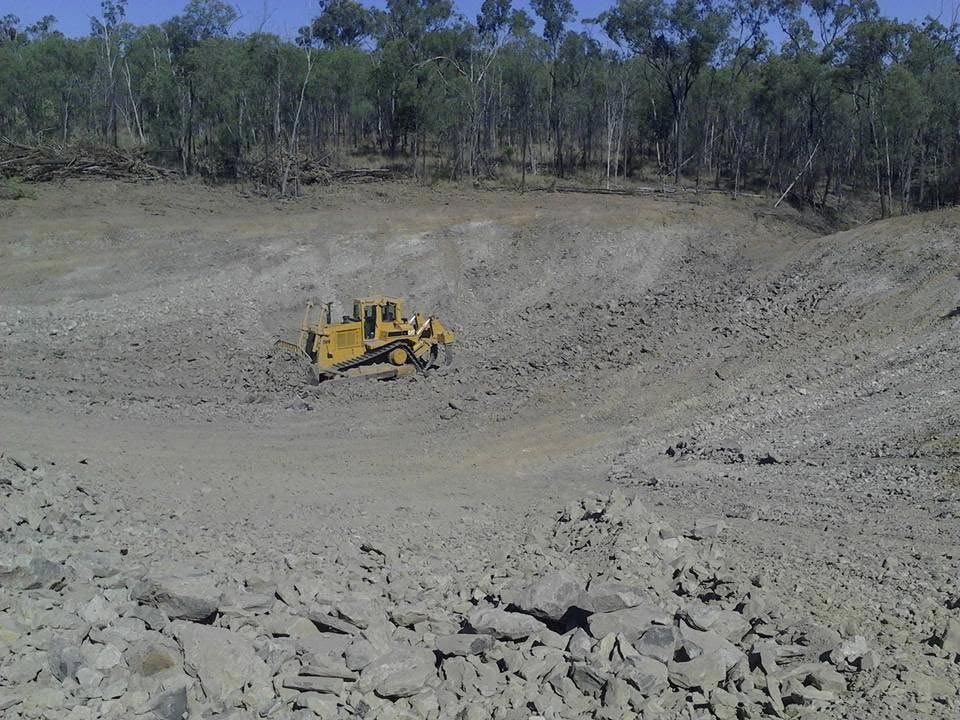
What Is an Earthen Farm Dam?
An earthen dam — sometimes called a turkey's nest dam, catchment dam or storage dam depending on its design — is essentially a basin or embankment constructed from compacted soil to collect and retain water. Unlike concrete structures, earthen dams work with the natural landscape rather than against it.
The basic mechanics are straightforward:
- A catchment area (the surrounding land) channels rainfall & surface runoff into the dam's basin
- Compacted clay soils form a low-permeability liner that prevents excessive seepage
- An overflow or spillway structure safely diverts excess water during heavy rain events
- The embankment walls are shaped& stabilised to resist erosion over time
The quality of the construction — particularly the compaction, the batter gradients and the spillway design — determines whether a dam performs reliably for decades or starts causing problems within a few seasons.
The Most Common Uses on Rural Properties
Farm dams aren't one-size-fits-all. The reason you're building one shapes everything from the size and location to the depth and design. On rural properties across Central Queensland, the four most common uses are:
- Livestock water supply is the most straightforward application. A well-positioned dam with a reliable catchment can sustain cattle, horses and other livestock through extended dry periods without reliance on town water or bore infrastructure. The key is matching storage capacity to your stocking rate and your driest anticipated stretch.
- Irrigation requires a bit more planning. Dams intended to supply irrigation need sufficient volume, reliable recharge rates and access infrastructure for pumping. For cropping or horticulture operations, water availability during the growing season is non-negotiable and undersized or poorly positioned dams won't cut it.
- Fire-fighting reserves are increasingly important on rural properties, particularly as fire seasons intensify. A dedicated water storage close to infrastructure, sheds or high-risk vegetation zones provides a meaningful buffer and can support both rural fire service operations and private firefighting equipment.
- Recreational use is more common than people expect. Dams on lifestyle and hobby farms are frequently used for swimming, fishing and general amenity. Structural integrity matters just as much here, though the design priorities — including depth, aesthetics and access points — may differ from a purely functional agricultural dam.
What Makes a Well-Built Dam
Good dam construction Rockhampton-style isn't just about moving dirt. It involves careful site assessment, understanding of soil types, proper compaction techniques and intelligent spillway design. Earthmoving Rockhampton contractors with experience in dam construction will tell you that the site investigation phase is just as important as the construction itself.
A well-constructed farm dam shares several characteristics:
- Suitable clay content in the base & embankment material to minimise seepage — sandy or gravelly soils alone won't hold water effectively
- Proper compaction of embankment walls in layers, not just bulk-pushed earthworks, to prevent internal erosion & slumping
- Correctly sized & positioned spillway to handle peak inflow events without overtopping the embankment
- Appropriate batter slopes on the embankment walls — typically no steeper than 1:2 or 1:3 depending on soil type — to prevent collapse
- Adequate freeboard (the gap between the waterline & the top of the embankment) to account for wave action & unexpected rainfall events
Cutting corners on any of these elements doesn't just affect performance — it can lead to structural failure, which on a property can mean significant erosion, property damage and a very expensive rebuild.
Signs Your Dam Needs Attention
Many landowners notice that their dam isn't performing as it should but aren't sure whether they're looking at a minor maintenance issue or something more serious. The signs that a dam may need professional assessment include:
- Persistent low water levels despite adequate rainfall — this often points to seepage through the base or embankment
- Seepage or wet patches on the downstream face of the embankment wall, which can indicate internal erosion or piping
- Cracking or slumping on the embankment surface, particularly after extended dry periods followed by heavy rain
- Erosion around the spillway or at the base of the embankment
- Poor water quality such as excessive turbidity or algae growth, sometimes linked to inadequate depth or catchment management
- Overgrowth of vegetation on the embankment walls — tree roots can compromise compacted clay & accelerate seepage
Dam repairs don't always require a full reconstruction. In many cases, targeted repairs to the spillway, the embankment face or the internal structure can restore function and extend the life of an existing dam significantly. The important thing is getting a proper assessment before minor problems become major ones.
The Role of Land Clearing in Dam Construction
Building a new dam almost always involves land clearing to some degree. Vegetation needs to be removed from the catchment area, access tracks established and the dam site itself cleared before earthworks can begin. Done properly, land clearing as part of a dam project sets the stage for a cleaner construction process and better long-term outcomes.
It's also worth thinking about catchment management beyond the dam itself. A heavily vegetated or overgrown catchment can reduce runoff significantly. Strategic clearing around the catchment area — removing thick scrub, managing ground cover — can meaningfully increase the volume of water reaching your dam during rain events. This is particularly relevant on heavily timbered Central Queensland properties where natural water collection is being undercut by dense vegetation.
Dam Construction as Part of Broader Earthmoving Works
Few rural property improvements happen in isolation. Rockhampton dam construction projects are often part of a broader scope of works that might include road and track formation, clearing for new paddocks, cut-and-fill for infrastructure platforms or drainage improvement works. Planning dam construction alongside other earthmoving tasks can reduce mobilisation costs and make the overall project more efficient.
Properties planning significant development (new infrastructure, subdivision, grazing improvement) often benefit from tackling dam construction as part of the first stage of earthworks, when machinery is already on site and the ground has been assessed. This approach avoids duplication of effort and allows the dam design to integrate with the overall site layout from the start.
Choosing the Right Location for a New Dam
Site selection is one of the most consequential decisions in any dam project. A dam built in the wrong location — regardless of how well it's constructed — will underperform consistently. The key factors in site selection include:
- Catchment area & slope: the dam needs a sufficiently large catchment with enough gradient to direct runoff reliably
- Soil type: clay-rich soils are essential for water retention; sandy or gravelly profiles may require additional liner material
- Proximity to infrastructure: close enough to be useful, far enough away to be safe in the event of a failure or overflow
- Topography: natural depressions or gullies are often the most efficient locations, requiring less earth to be moved to create the same storage volume
- Existing drainage patterns: understanding how water currently moves across the property helps determine where a dam will collect the most runoff
A site inspection from an experienced earthmoving contractor before design work begins will save time, money and frustration. What looks like an ideal location on a map can quickly reveal complications on the ground and vice versa.
Maintenance Habits That Protect Your Investment
Once a dam is built, ongoing maintenance is what keeps it performing for the long term. A dam that's left unattended for years will slowly degrade, often in ways that aren't immediately obvious until a major issue develops.
Practical maintenance habits include:
- Inspecting the embankment after significant rainfall events for cracking, slumping or erosion
- Keeping the embankment clear of large trees & deep-rooted shrubs — grass cover is fine & actually helps with erosion control
- Monitoring the spillway for blockages, erosion or structural deterioration
- Checking water levels relative to rainfall to detect unexpected drops that might indicate seepage
- Managing stock access to the embankment — unrestricted cattle access can cause significant compaction damage & erosion on the walls
Dam repairs are almost always less expensive when addressed early. A small seepage issue caught during an annual inspection is far more manageable than the same problem discovered after three more seasons of neglect.
Ready to Build or Repair a Dam on Your Property?
We at Mike Barlow Earthmoving work with rural and semi-rural property owners across the Rockhampton and Central Queensland region on everything from new dam construction to targeted repairs on existing structures. We understand the local conditions — the clay soils, the seasonal rainfall patterns, the demands of working properties — and we bring that knowledge to every project we take on.
Whether you're starting from scratch on a new property, dealing with a dam that's been losing water for a season or two, or planning a broader earthmoving and land clearing project that includes a dam as part of the scope, we're happy to have a conversation about what's involved. Central Queensland's variable seasons and red soil country come with their own set of considerations and getting the construction right from the start is always easier than fixing problems down the track.
Give us a call or reach out through our website to discuss your property and what you're trying to achieve. We're straightforward to deal with and we'll give you honest advice about what's realistic for your site and your budget.